
Complete Health Indicator Report of Hazardous Substance Releases
Definition
The National Toxic Substance Incidents Program (NTSIP) defines hazardous substances emergency events as acute uncontrolled or illegal releases of hazardous substances. Events involving releases of only petroleum are only included if there are injuries or public health action (including environmental sampling, evacuations, etc). Events are included if the amount of substance released needed to be removed, cleaned up, or neutralized according to federal, state, or local laws.Numerator
This Indicator Report contains the following variables: 1. Number of hazardous substance releases 2. Number of victims of hazardous substance releasesDenominator
Not applicable.Data Interpretation Issues
The NTSIP includes events involving releases of petroleum only if there are injuries or public health action (including environmental sampling, evacuations, etc). Petroleum being used as a fuel in a vehicle at the time of the incident is not included. Data includes only acute releases, defined as lasting less than 72 hours. NTSIP is primarily focused on releases that involve an industry, so small quantity release limitations apply. The number of NTSIP events is limited by reporter's adherence to reporting requirements. NTSIP reporting is supported by state and federal environmental laws, by the Utah injury reporting rule R386-703 section (i) Chemical Poisoning, and by voluntary reporting. For more details on the Utah injury reporting rule R386-703 section (i) Chemical Poisoning go to http://www.rules.utah.gov/publicat/code/r386/r386-703.htm#T3. For more details on state and federal environmental laws and rules go to http://www.deq.utah.gov/Laws_Rules/.Why Is This Important?
Hazardous substance releases may not occur often, but when they do occur, they have the potential for causing harmful health effects. The National Toxic Substance Incidents Program (NTSIP) system actively collects information to describe the public health consequences of acute (less than 72 hours) releases of hazardous substances in participating states. This Indicator Report summarizes the characteristics of events reported in Utah. Information about acute events involving hazardous substances were collected, including the substance(s) released, number of victims, and number and types of injuries. The data were computerized using an ATSDR-provided Web-based data entry system. This data provides needed information to create prevention activities, which can decrease injury and death as a result of a hazardous material release. Knowing what kind of hazardous materials commonly exist in Utah, how and where they are released, and the effects they have on employees, responders, and the general public will create opportunities for improved policies, procedures, and training for a cleaner, safer environment.Healthy People Objective EH-11:
Reduce the amount of toxic pollutants released into the environmentU.S. Target: 3.5 billion pounds
How Do We Compare With the U.S.?
The National Toxic Substance Incidents Program (NTSIP) system is directed by the Agency for Toxic Substances and Disease Registry (ATSDR). Seven state health departments currently have cooperative agreements with ATSDR to participate in NTSIP: Louisiana, New York, North Carolina, Oregon, Tennessee, Utah, and Wisconsin. For more information on the National NTSIP, go to http://www.atsdr.cdc.gov//ntsip/.Available Services
Utah Poison Control Center: Poison Emergencies, Questions, and Prevention Information Call 1-800-222-1222 Utah Division of Environmental Response and Remediation: 24 Hour Emergency Phone Number for Incident Spills - (801) 536-4123Related Indicators
Related Relevant Population Characteristics Indicators:
Graphical Data Views
Hazardous Substance Releases by County, Utah, 2010-2014
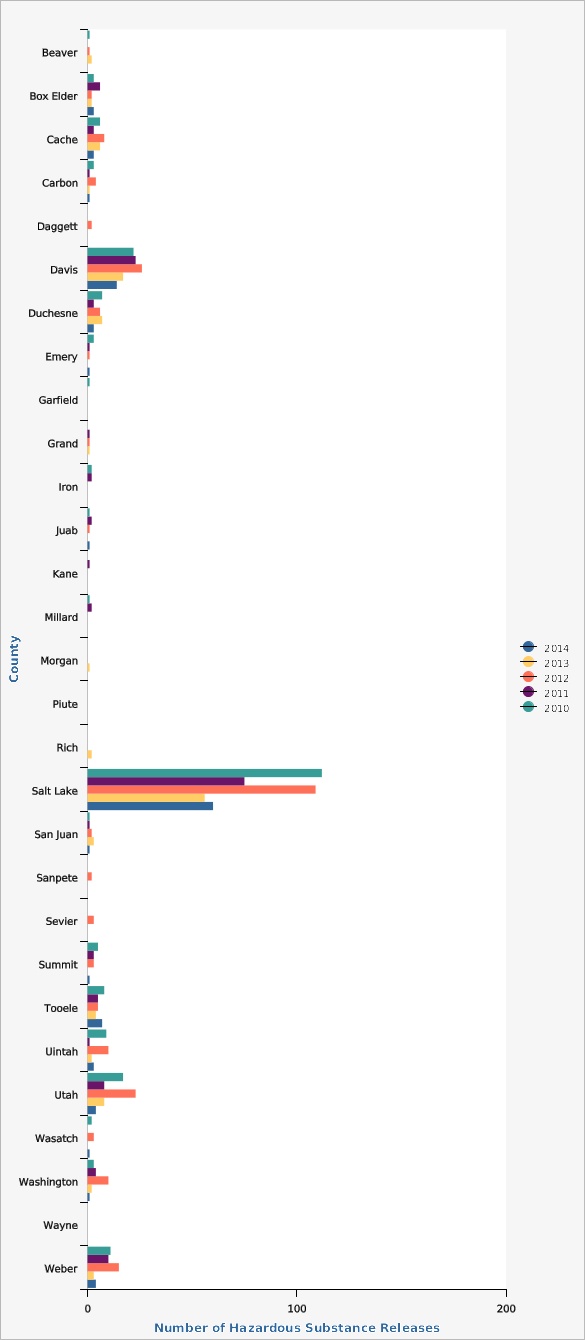
| Year | County | Number of Hazardous Substance Releases | ||||
|---|---|---|---|---|---|---|
Record Count: 145 | ||||||
| 2010 | Beaver | 1 | ||||
| 2010 | Box Elder | 3 | ||||
| 2010 | Cache | 6 | ||||
| 2010 | Carbon | 3 | ||||
| 2010 | Daggett | 0 | ||||
| 2010 | Davis | 22 | ||||
| 2010 | Duchesne | 7 | ||||
| 2010 | Emery | 3 | ||||
| 2010 | Garfield | 1 | ||||
| 2010 | Grand | 0 | ||||
| 2010 | Iron | 2 | ||||
| 2010 | Juab | 1 | ||||
| 2010 | Kane | 0 | ||||
| 2010 | Millard | 1 | ||||
| 2010 | Morgan | 0 | ||||
| 2010 | Piute | 0 | ||||
| 2010 | Rich | 0 | ||||
| 2010 | Salt Lake | 112 | ||||
| 2010 | San Juan | 1 | ||||
| 2010 | Sanpete | 0 | ||||
| 2010 | Sevier | 0 | ||||
| 2010 | Summit | 5 | ||||
| 2010 | Tooele | 8 | ||||
| 2010 | Uintah | 9 | ||||
| 2010 | Utah | 17 | ||||
| 2010 | Wasatch | 2 | ||||
| 2010 | Washington | 3 | ||||
| 2010 | Wayne | 0 | ||||
| 2010 | Weber | 11 | ||||
| 2011 | Beaver | 0 | ||||
| 2011 | Box Elder | 6 | ||||
| 2011 | Cache | 3 | ||||
| 2011 | Carbon | 1 | ||||
| 2011 | Daggett | 0 | ||||
| 2011 | Davis | 23 | ||||
| 2011 | Duchesne | 3 | ||||
| 2011 | Emery | 1 | ||||
| 2011 | Garfield | 0 | ||||
| 2011 | Grand | 1 | ||||
| 2011 | Iron | 2 | ||||
| 2011 | Juab | 2 | ||||
| 2011 | Kane | 1 | ||||
| 2011 | Millard | 2 | ||||
| 2011 | Morgan | 0 | ||||
| 2011 | Piute | 0 | ||||
| 2011 | Rich | 0 | ||||
| 2011 | Salt Lake | 75 | ||||
| 2011 | San Juan | 1 | ||||
| 2011 | Sanpete | 0 | ||||
| 2011 | Sevier | 0 | ||||
| 2011 | Summit | 3 | ||||
| 2011 | Tooele | 5 | ||||
| 2011 | Uintah | 1 | ||||
| 2011 | Utah | 8 | ||||
| 2011 | Wasatch | 0 | ||||
| 2011 | Washington | 4 | ||||
| 2011 | Wayne | 0 | ||||
| 2011 | Weber | 10 | ||||
| 2012 | Beaver | 1 | ||||
| 2012 | Box Elder | 2 | ||||
| 2012 | Cache | 8 | ||||
| 2012 | Carbon | 4 | ||||
| 2012 | Daggett | 2 | ||||
| 2012 | Davis | 26 | ||||
| 2012 | Duchesne | 6 | ||||
| 2012 | Emery | 1 | ||||
| 2012 | Garfield | 0 | ||||
| 2012 | Grand | 1 | ||||
| 2012 | Iron | 0 | ||||
| 2012 | Juab | 1 | ||||
| 2012 | Kane | 0 | ||||
| 2012 | Millard | 0 | ||||
| 2012 | Morgan | 0 | ||||
| 2012 | Piute | 0 | ||||
| 2012 | Rich | 0 | ||||
| 2012 | Salt Lake | 109 | ||||
| 2012 | San Juan | 2 | ||||
| 2012 | Sanpete | 2 | ||||
| 2012 | Sevier | 3 | ||||
| 2012 | Summit | 3 | ||||
| 2012 | Tooele | 5 | ||||
| 2012 | Uintah | 10 | ||||
| 2012 | Utah | 23 | ||||
| 2012 | Wasatch | 3 | ||||
| 2012 | Washington | 10 | ||||
| 2012 | Wayne | 0 | ||||
| 2012 | Weber | 15 | ||||
| 2013 | Beaver | 2 | ||||
| 2013 | Box Elder | 2 | ||||
| 2013 | Cache | 6 | ||||
| 2013 | Carbon | 1 | ||||
| 2013 | Daggett | 0 | ||||
| 2013 | Davis | 17 | ||||
| 2013 | Duchesne | 7 | ||||
| 2013 | Emery | 0 | ||||
| 2013 | Garfield | 0 | ||||
| 2013 | Grand | 1 | ||||
| 2013 | Iron | 0 | ||||
| 2013 | Juab | 0 | ||||
| 2013 | Kane | 0 | ||||
| 2013 | Millard | 0 | ||||
| 2013 | Morgan | 1 | ||||
| 2013 | Piute | 0 | ||||
| 2013 | Rich | 2 | ||||
| 2013 | Salt Lake | 56 | ||||
| 2013 | San Juan | 3 | ||||
| 2013 | Sanpete | 0 | ||||
| 2013 | Sevier | 0 | ||||
| 2013 | Summit | 0 | ||||
| 2013 | Tooele | 4 | ||||
| 2013 | Uintah | 2 | ||||
| 2013 | Utah | 8 | ||||
| 2013 | Wasatch | 0 | ||||
| 2013 | Washington | 2 | ||||
| 2013 | Wayne | 0 | ||||
| 2013 | Weber | 3 | ||||
| 2014 | Beaver | 0 | ||||
| 2014 | Box Elder | 3 | ||||
| 2014 | Cache | 3 | ||||
| 2014 | Carbon | 1 | ||||
| 2014 | Daggett | 0 | ||||
| 2014 | Davis | 14 | ||||
| 2014 | Duchesne | 3 | ||||
| 2014 | Emery | 1 | ||||
| 2014 | Garfield | 0 | ||||
| 2014 | Grand | 0 | ||||
| 2014 | Iron | 0 | ||||
| 2014 | Juab | 1 | ||||
| 2014 | Kane | 0 | ||||
| 2014 | Millard | 0 | ||||
| 2014 | Morgan | 0 | ||||
| 2014 | Piute | 0 | ||||
| 2014 | Rich | 0 | ||||
| 2014 | Salt Lake | 60 | ||||
| 2014 | San Juan | 1 | ||||
| 2014 | Sanpete | 0 | ||||
| 2014 | Sevier | 0 | ||||
| 2014 | Summit | 1 | ||||
| 2014 | Tooele | 7 | ||||
| 2014 | Uintah | 3 | ||||
| 2014 | Utah | 4 | ||||
| 2014 | Wasatch | 1 | ||||
| 2014 | Washington | 1 | ||||
| 2014 | Wayne | 0 | ||||
| 2014 | Weber | 4 | ||||
Data Notes
The National Toxic Substance Incidents Program (NTSIP) is supported with funds from the CERCLA trust fund, and the Office of Terrorism Planning and Emergency Response of the CDC, and provided by the Agency for Toxic Substances and Disease Registry (ATSDR), Public Health Service, U.S. Department of Health and Human Services under Cooperative Agreement Number U61TS874146.Data Source
National Toxic Substance Incidents Program (NTSIP)Hazardous Substance Releases by Year, Utah, 2000-2014
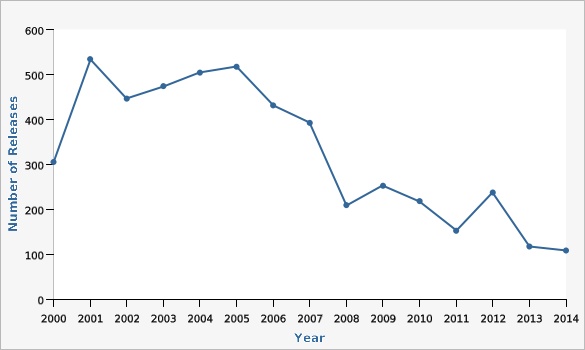
| Year | Number of Releases | |||||
|---|---|---|---|---|---|---|
Record Count: 15 | ||||||
| 2000 | 305 | |||||
| 2001 | 534 | |||||
| 2002 | 446 | |||||
| 2003 | 474 | |||||
| 2004 | 504 | |||||
| 2005 | 517 | |||||
| 2006 | 431 | |||||
| 2007 | 392 | |||||
| 2008 | 209 | |||||
| 2009 | 252 | |||||
| 2010 | 218 | |||||
| 2011 | 152 | |||||
| 2012 | 237 | |||||
| 2013 | 117 | |||||
| 2014 | 108 | |||||
Data Notes
The National Toxic Substance Incidents Program (NTSIP) is supported with funds from the CERCLA trust fund, and the Office of Terrorism Planning and Emergency Response of the CDC, and provided by the Agency for Toxic Substances and Disease Registry (ATSDR), Public Health Service, U.S. Department of Health and Human Services under Cooperative Agreement Number U61TS874146. Reporting requirements for releases can impact yearly number of releases reported hereData Source
National Toxic Substance Incidents Program (NTSIP)Number of Victims of Hazardous Substance Releases by Substance Category, 2000-2009
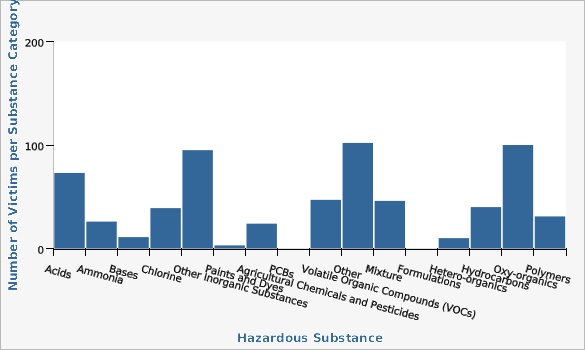
| Hazardous Substance | Number of Victims per Substance Category | |||||
|---|---|---|---|---|---|---|
Record Count: 16 | ||||||
| Acids | 73 | |||||
| Ammonia | 26 | |||||
| Bases | 11 | |||||
| Chlorine | 39 | |||||
| Other Inorganic Substances | 95 | |||||
| Paints and Dyes | 3 | |||||
| Agricultural Chemicals and Pesticides | 24 | |||||
| PCBs | 0 | |||||
| Volatile Organic Compounds (VOCs) | 47 | |||||
| Other | 102 | |||||
| Mixture | 46 | |||||
| Formulations | 0 | |||||
| Hetero-organics | 10 | |||||
| Hydrocarbons | 40 | |||||
| Oxy-organics | 100 | |||||
| Polymers | 31 | |||||
Data Notes
The National Toxic Substance Incidents Program (NTSIP) is supported with funds from the CERCLA trust fund, and the Office of Terrorism Planning and Emergency Response of the CDC, and provided by the Agency for Toxic Substances and Disease Registry (ATSDR), Public Health Service, U.S. Department of Health and Human Services under Cooperative Agreement Number U61TS874146.Data Source
National Toxic Substance Incidents Program (NTSIP)References and Community Resources
Utah Department of Health National Toxic Substance Incidents Program Surveillance Program website: http://epht.health.utah.gov/epht-view/topic/HazardousSubstance.html Utah Poison Control Center website: http://uuhsc.utah.edu/poison/ Agency for Toxic Substance and Disease Registry website: http://www.atsdr.cdc.gov//ntsip Utah Division of Environmental Response and Remediation website: http://www.environmentalresponse.utah.gov/ For more details on the Utah injury reporting rule R386-703 section (i) Chemical Poisoning go to http://www.rules.utah.gov/publicat/code/r386/r386-703.htm#T3. For more details on the state and federal environmental laws and rules go to http://www.deq.utah.gov/Laws_Rules/.More Resources and Links
Evidence-based community health improvement ideas and interventions may be found at the following sites:- Centers for Disease Control and Prevention (CDC) WONDER Database, a system for disseminating public health data and information.
- United States Census Bureau data dashboard.
- Utah healthy Places Index, evidence-based and peer-reviewed tool, supports efforts to prioritize equitable community investments, develop critical programs and policies across the state, and much more.
- County Health Rankings
- Kaiser Family Foundation's StateHealthFacts.org
- Medical literature can be queried at PubMed library.
Page Content Updated On 04/08/2015,
Published on 04/09/2015